July 30, 2026

What began as a rethinking of the traditional festival talk has become one of DokuFest's most distinct place where films lead to wider conversations about memory, resistance, responsibility and the societies in which they are made.
At five in the afternoon, while the day's screenings are still settling in people's minds, audiences, filmmakers and guests gather at the Music School “Lorenc Antoni” in Prizren for the questions that remain after the film screening.
At DokuFest's 25th edition, the programme is no longer simply a series of panels placed between screenings. It has become a distinct editorial section of the Festival, bringing filmmakers, thinkers, activists, cultural workers and audiences together for urgent conversations about film and society.
Public discussion has long been part of DokuFest, and the name DokuTalks appeared in the programme before 2021. But the present form of the programme began to take shape that year, as the Festival returned to its physical cinemas after the disrupted, the online edition of 2020.
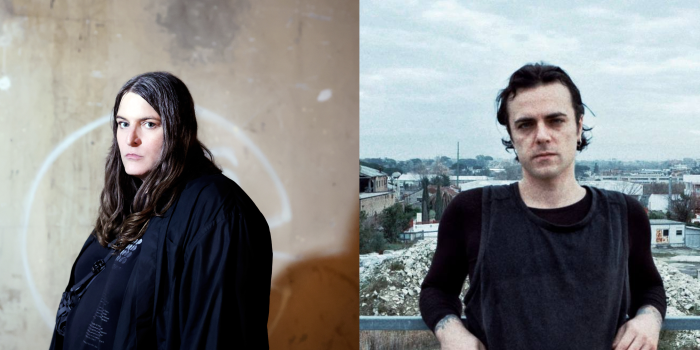
Producer and Head of DokuLab Eroll Bilibani began rethinking the talks with Kosovar-Swiss filmmaker Dea Gjinovci in 2021 during the Cannes Film Festival. The intention was simple, though not necessarily easy to achieve: move away from the predictable festival panel and create something documentary cinema connects with activism, ethics and festival responsibility.
By 2022, DokuTalks had grown into eight panel discussions and the programme ranged from the climate crisis and the responsibilities filmmakers have toward documentary protagonists to copyright-based industries and the social realities surrounding birth and motherhood. Since then, DokuTalks became recognizable not only through its subjects but through its way of working. Each edition built an argument across several days.
The development of DokuTalks is closely connected to Bilibani’s collaboration with filmmaker Dea Gjinovci.
“The way DokuTalks has grown is something I feel very proud of, but I don’t think I would have understood its full potential without Dea,” Bilibani says. “Her idea that the talks could become a real space for sharing knowledge was an eye-opener for me. Until then, I still saw them mostly as something supporting the film programme. She helped me understand that they could have their own voice and purpose.”
Gjinovci’s role has extended well beyond moderating conversations. She has helped shape the subjects, identify connections between films and bring different kinds of knowledge into the room. Her own experience as a filmmaker has also kept the programme grounded in practice.
“Dea always brings the conversation back to the actual work: the choices made while filming, the relationships with participants and the responsibility that continues after a film is finished,” Bilibani explains.
Their process usually begins with the films and the questions they share. Works emerging from very different political or cultural contexts can often be dealing with the same concern. From there, the curators consider who else should join the discussion; not only filmmakers, but activists, researchers, critics, producers and people directly connected to the subject.
“For me, the most important change is that DokuTalks has become more than a place where people present their work,” Bilibani says. “It has become a space where experiences and knowledge can genuinely be shared, and Dea has been central to making that possible.”
This approach has allowed DokuTalks to move between cinema and the world around it, without losing sight of either.
The 2026 DokuTalks programme may be its clearest expression so far. Across six conversations, a pattern emerges. It begins with histories that have been erased, passes through testimony and inherited memory, and then turns toward the networks, images and public institutions that determine whether stories can continue to matter.
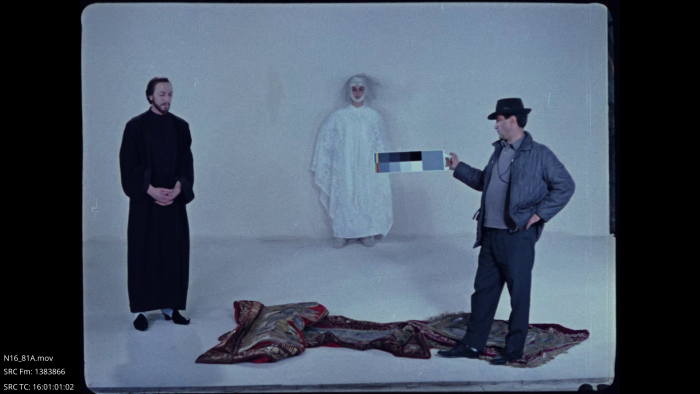
Hybrid Cinema as Political Language, moderated by Gjinovci on 8 August, asks how filmmakers respond when political histories, cultural legacies and material heritage have been forcibly removed or destroyed. Sanaz Sohrabi, Sabine Groenewegen, Michael Barwise and Aurélia Martin bring practices that combine archives, contemporary footage, reconstruction, performance and speculation. The discussion treats hybrid form not as an aesthetic trend, but as a possible response to historical power: a way to question official narratives and rebuild what can no longer be filmed directly.
On 9 August, After Silence: Film, Testimony and Justice after Conflict-Related Sexual Violence brings together experiences from Ukraine, Kosovo and Mexico. The conversation asks how cinema can work with testimony, family absence and the traces left by violence while protecting the dignity and complexity of those represented. Filmmakers Alisa Kovalenko and Karla Condado are joined by Dr. Feride Rushiti of the Kosovo Rehabilitation Centre for Torture Victims and scholar Eralda L. Lameborshi, with Sanjin Pejković moderating. The emphasis is not only on what film can reveal, but on the limits it must recognize.
Inherited Memory, moderated by Besa Luci on 10 August, turns toward diaspora filmmaking. Kaki Wong, Edona Ademi, Eneos Çarka and Diell Curri consider how a relationship with home is constructed when home is distant, remembered by others or politically unreachable. Here, language, family archives and stories passed between generations become cinematic material. Distance can clarify certain things, but it can also distort them. The discussion asks filmmakers to confront both possibilities.
On 11 August, Who Helps a Short Film Travel? shifts from memory to infrastructure. Part of the Short Film Forum, the talk begins with Who Is Singing?, the winning project from last year's Forum. After Prizren, the project continued to ShorTO in Turin, found a Croatian co-producer and secured funding in Kosovo and Croatia. Moderated by Jing Haase, the conversation brings Sonja Henrici, Yun-Hua Chen, Florian Fernandez and Wouter Jansen into a practical discussion about communication, trust, co-production, markets, festivals and distribution. It makes visible the relationships that often determine whether a promising film moves beyond its first pitch.
Images of Resistance: When Documentation Becomes Activism follows on 12 August. Moving between Albania's Flamingo Revolution, Serbia's student protests and the aftermath of political unrest in Hong Kong, Mei Seva, Adem Tutić and Rico Wong examine what happens when images recorded by artists and citizens begin circulating beyond their original context. Moderated by Brigid O'Shea, the talk asks when witnessing becomes participation, what responsibilities come with filming people during political struggle, and who controls an image once it enters the global stream.
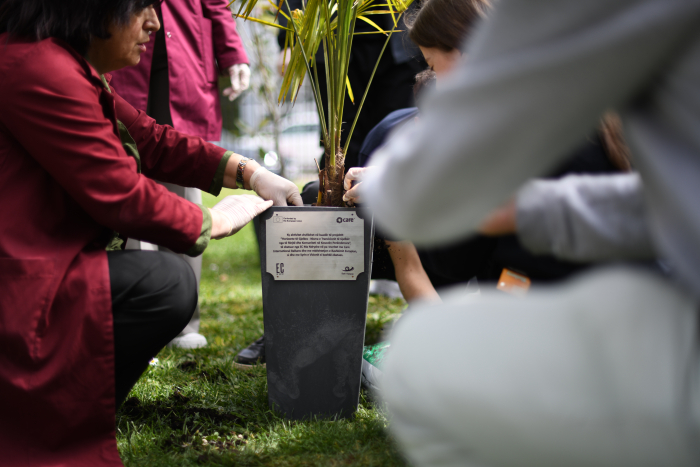
With the assistance of the regional project EU Support to Confidence Building in the Western Balkans, which is funded by the European Union (EU) and implemented by the United Nations Development Programme (UNDP) we continue our partnership with Humanitarian Law Center Kosovo (HLCK) we presented a 'Beyond Silence' exhibition that opens on August 12 at Shani Efendi Gallery, bringing the project’s reflections on memory, loss, courage and hope into a shared public space; followed by a DokuTalk What Remains? Film, Memory and Unfinished Justice on 13th at the Music School “Lorenc Antoni". This DokuTalk brings together perspectives from cinema, theatre, museums, architecture and public institutions. The discussion asks what happens when personal experience and testimony become part of a film, exhibition, performance or public narrative.
The programme closes on 14 August with Visioning the Public Cinema. Rather than presenting a finished institutional model, the conversation opens the development of Kosovo's Network of Public Cinemas to filmmakers, programmers, cultural workers and audiences. Blerta Zeqiri, Veton Nurkollari, Per Fikse and Elena Ciofalo moderated by Ares Shporta, will consider how public cinemas can build audiences, respond to their communities and remain active cultural spaces rather than buildings that simply screen films.
Taken together, these talks reveal what DokuTalks has become. The programme is interested not only in what an image represents, but in what happens around it: who records it, who is allowed to speak, who preserves it, who helps it travel and what kind of public space allows people to encounter it together.
That is why the conversations belong inside a film festival. They extend the act of watching rather than interrupting it.
Every DokuTalk in 2026 begins at 17:00 at the Music School “Lorenc Antoni.”
Admission is free.