
DokuTalks
DokuTalks brings together filmmakers, thinkers and audiences for urgent conversations about film and society.
Visual Conversations
DokuFest’s Visual Conversations bring audiences closer to the creative process, as filmmakers share the choices, methods and experiences behind their work.
Short Film Forum
A DokuFest platform supporting young filmmakers to develop, present and advance short film projects.
Forum Guest Country: Italy
DokuFest's partnership with the Italian Short Film Center welcomes Italy as the Forum's 2026 Guest Country, connecting Italian projects, filmmakers and archival cinema with Balkan producers, funds and decision-makers. This partnership is supported by Italian Embassy in Prishtina and Istituto Italiano di Cultura - Tirana.
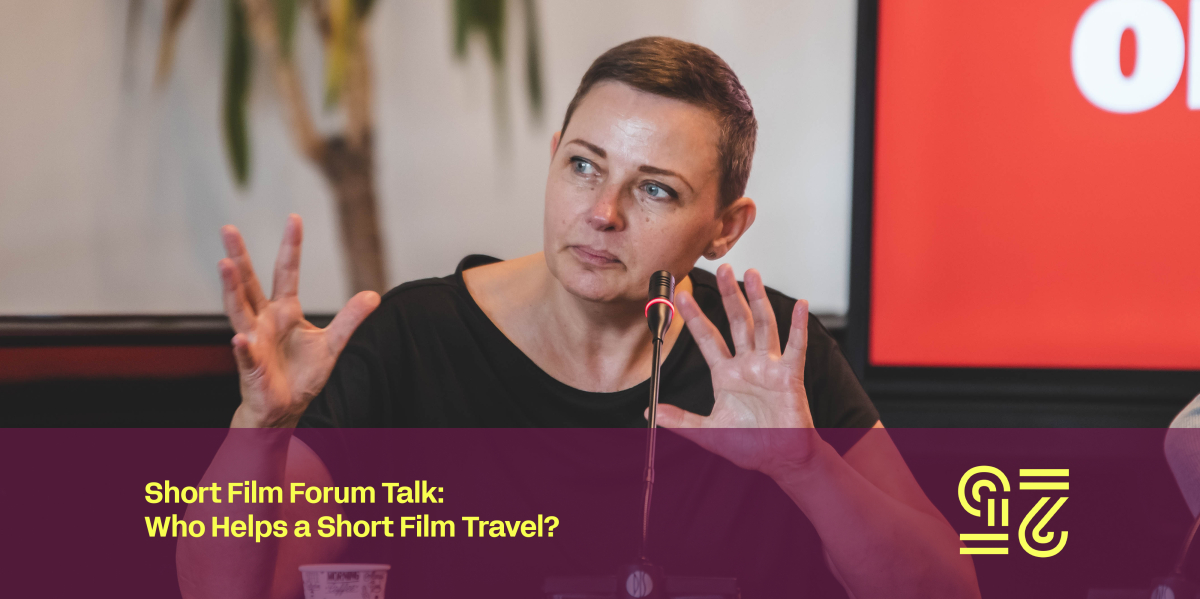
Tuesday, August 11
17:00
Shkolla e Muzikes 'Lorenc Antoni'
DokuTalks
Who Helps a Short Film Travel?
Communication, Co-Productions and the Networks Behind a Film’s Journey
A short film rarely travels on the strength of the film alone. It also needs a team that can communicate its vision, partners who understand what the project needs, and networks that can connect it to the right opportunities.
The conversation begins with Who Is Singing?, the winning project of last year’s Short Film Forum. After Prizren, the team presented the project at ShorTO in Turin, found a Croatian co-producer, and later secured funding in both Kosovo and Croatia.
From there, the panel will look at the practical decisions behind a film’s journey. How should directors and producers communicate? When does a co-production bring real value? What do festivals, markets and sales agents look for, and how can filmmakers build relationships that continue beyond the first pitch?
This DokuTalk is part of DokuFest’s Short Film Forum and is designed especially for emerging filmmakers and producers. It offers a closer look at the parts of the industry that aren’t always explained clearly: how introductions happen, how trust is built, and what can help a promising project find its way forward.
Moderated by:
Jing Haase - Curator, short film expert and co-manager of the DokuFest Short Film Forum, with more than two decades of experience in programming, markets and international film distribution.
Panelists:
Sonja Henrici - International producer and founder of Sonja Henrici Creates, and former co-director of the Scottish Documentary Institute, with extensive experience in production, co-production and distribution.
Yun-Hua Chen - Film scholar, critic and curator who serves on the selection committees of Berlinale Shorts, Berlinale Forum and DokuFest.
Florian Fernandez - Head of the Short Film Corner | Rendez-vous Industry at the Festival de Cannes, where he develops initiatives connecting emerging filmmakers with the international industry.
Wouter Jansen - Founder and director of Square Eyes, a sales and festival distribution agency representing distinctive short films and features on the international circuit.
Admission to DokuTalks is free. Seating is limited and available on a first-come, first-served basis.
More in DokuTalks
Hybrid Cinema as Political Language
When the past, cultural legacies, and material heritage are forcibly erased or destroyed, how do filmmakers respond? This panel asks whether hybrid cinema can forge a new political language, one capable of challenging official narratives and reimagining what has been lost.
After Silence: Film, Testimony and Justice after Conflict-Related Sexual Violence
Moving from testimony and the visible and hidden traces of war in Ukraine, through the lasting consequences of wartime sexual violence in Kosovo, to an intimate story of femicide, family absence and fear in Mexico, this DokuTalk explores how filmmakers use memory, digital traces and performance to create spaces for recognition, solidarity and justice.
Inherited Memory
How do filmmakers create a relationship with home when home is remembered, inherited, lost, or politically unreachable? Is home a place, a language, a family story or a filmic reconstruction? Kosovar diaspora filmmakers, alongside voices from other displaced contexts, explore what distance reveals, what it distorts, and how it changes a filmmaker's responsibility.
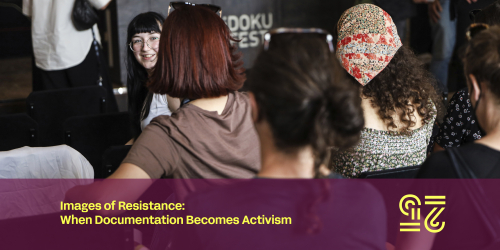
Images of Resistance: When Documentation Becomes Activism
Images recorded during moments of resistance can do more than document what happened. They can carry a local struggle across borders, preserve memories that those in power may prefer forgotten, and turn witnessing into a form of participation.
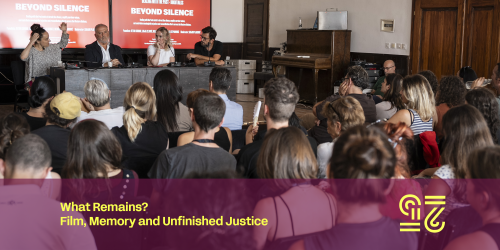
What Remains? Film, Memory and Unfinished Justice
What Remains? Film, Memory and Unfinished Justice brings together perspectives from cinema, theatre, museums, architecture and public institutions. The discussion asks what happens when personal experience and testimony become part of a film, exhibition, performance or public narrative.
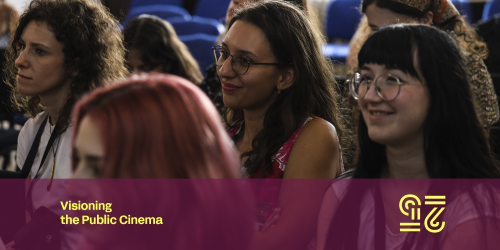
Visioning the Public Cinema
The discussion brings together local experiences in reviving and programming public cinemas in Kosovo and international experiences in festival programming, audience development and cinema networks and marks the beginning of a broader public process that will contribute to the development of the Network of Public Cinemas in Kosovo.